
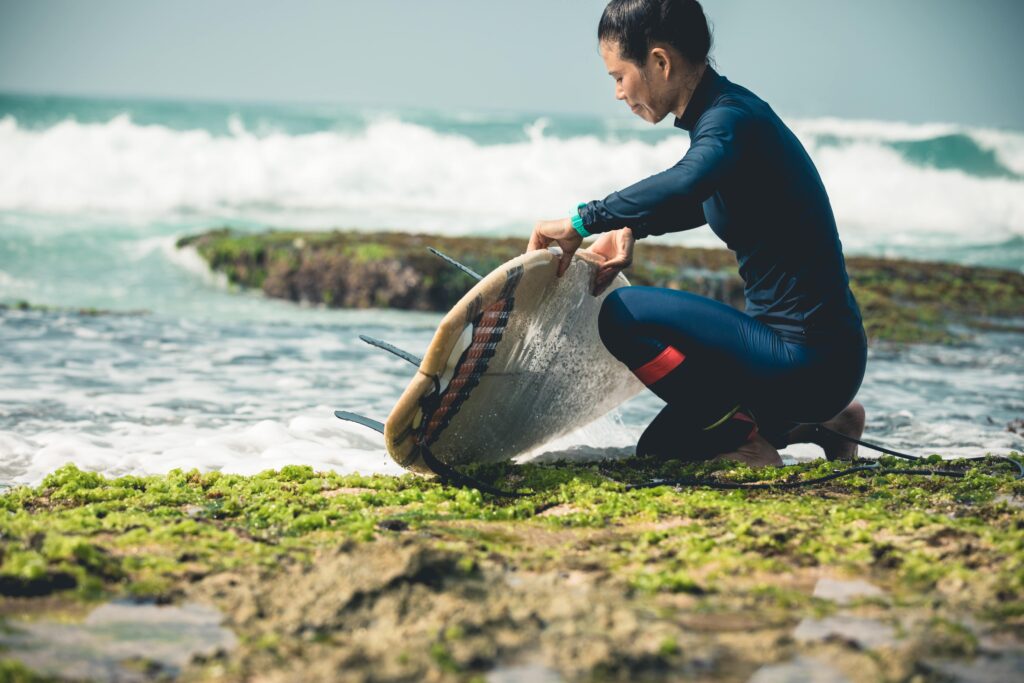
The ocean gives us everything: waves, freedom, and community. But in return, we leave behind one of the world’s worst pollutants — plastic. From single-use packaging to tiny microplastics, plastic waste is choking marine life. As surfers, we’re in a unique position to lead the movement toward plastic-free living. Here’s how even small changes in your surfing lifestyle can protect the ocean.
The Problem with Plastic
- 8 million tons of plastic enter oceans every year.
- Marine animals mistake plastic for food, leading to death or injury.
- Microplastics are found in fish, salt, and even drinking water.
Even surf gear contributes — wax wraps, plastic fins, poly board bags, synthetic wetsuits.
Small Plastic-Free Swaps Every Surfer Can Make
1. Switch to Plastic-Free Surf Wax
Instead of petroleum wax wrapped in plastic, choose eco-friendly wax in recyclable or compostable packaging.
2. Use a Reusable Water Bottle
Single-use plastic bottles are one of the biggest ocean polluters. A stainless steel or bamboo flask lasts years.
3. Eco Surfboard Bags
Swap plastic bubble-wrap travel bags for hemp, canvas, or recycled PET covers.
4. Sustainable Wetsuits
Many new wetsuits use natural rubber (Yulex) instead of petroleum neoprene.
5. Reef-Safe Sunscreen
Most sunscreens contain oxybenzone which harms coral. Reef-safe sunscreens use natural minerals like zinc oxide.
Surfing Community Initiatives
Surfers worldwide are leading by example:
- Beach Cleanups: Local surf clubs organize monthly events.
- Plastic-Free Surf Shops: Stock only eco gear.
- Awareness Campaigns: Social media movements to inspire others.
Why It Matters
- Protects marine biodiversity (turtles, dolphins, fish).
- Keeps beaches clean and safe.
- Builds a sustainable surfing culture for future generations.
Beyond Surfing: Everyday Plastic-Free Habits
- Carry your own shopping bag.
- Use bamboo toothbrushes instead of plastic ones.
- Choose bulk or refill stations instead of packaged products.
- Compost biodegradable waste instead of sending it to landfills.